Clinical Science of Ayurveda: Kalyanaka Ghrita for Cognitive Decline, Marma Therapy for Spinal Pain, and Nisha Amalaki for Hypertension
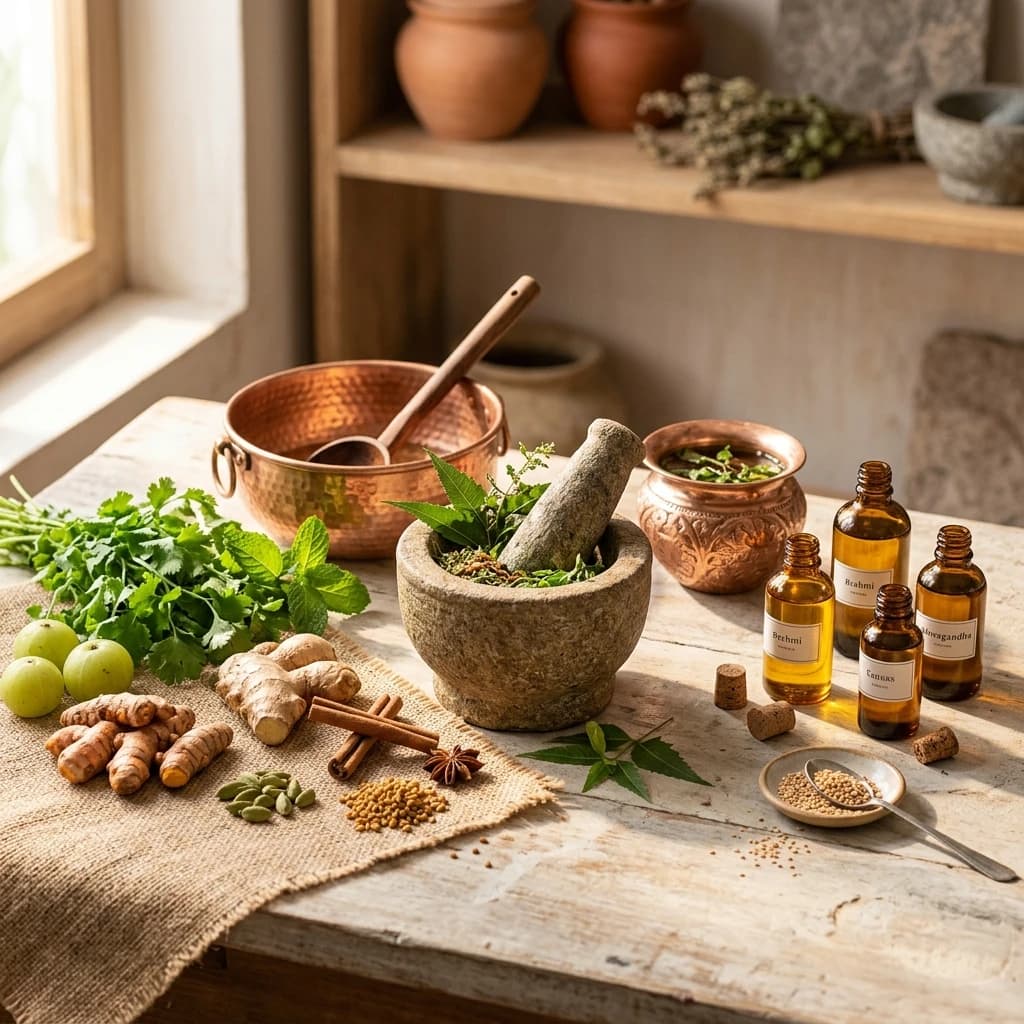
Clinical Science of Ayurveda: Kalyanaka Ghrita for Cognitive Decline, Marma Therapy for Spinal Pain, and Nisha Amalaki for Hypertension
The integration of traditional Indian medicine (AYUSH) with contemporary research methodology is generating highly credible evidence for holistic therapeutics. This week, we examine three landmark developments in wellness science: the world's first published Ayurvedic N-of-1 trial evaluating Kalyanaka Ghrita for cognitive impairment, a randomized controlled trial investigating Marma therapy as a non-invasive treatment for spinal pain and disc herniation, and clinical evaluations of Nisha Amalaki in regulating blood pressure. By analyzing these traditional interventions through the lens of modern clinical research, we can understand the biological mechanisms that support their preventive and curative actions.
🌿 Kalyanaka Ghrita: A Landmark N-of-1 Trial for Personalized Cognitive Care
Classical Ayurvedic psychiatry and neurology rely on specialized herbal fats known as Ghritas (medicated ghee) to cross biological barriers and nourish the nervous system. Among these, Kalyanaka Ghrita is a renowned classical formulation recorded in the Charaka Samhita and Ashtanga Hridaya. It consists of a synergistic combination of rejuvenating herbs processed in cow's ghee (Go-Ghrita). In Ayurvedic pharmacology, this formulation is categorized as a Medhya Rasayana—a cognitive-rejuvenating tonic designed to stabilize the mind, enhance memory, and treat emotional disorders. It specifically targets Sadhaka Pitta (the sub-dosha of Pitta governing intellect, self-esteem, and memory) and Prana Vata (the sub-dosha of Vata regulating nerve impulses and mental functions), while the lipid vehicle (Anupana) facilitates the transport of lipid-soluble phytochemicals across the blood-brain barrier to nourish the nervous tissue (Majja Dhatu).
In a major milestone for integrative neurology, physician-scientists at Banaras Hindu University (BHU) published the world's first Ayurvedic N-of-1 clinical trial in the Journal of Ethnopharmacology in June 2026. An N-of-1 trial is a highly personalized, single-patient research design where the participant serves as their own control through alternating treatment and no-treatment periods. Over a 14-month period, the researchers evaluated the efficacy and safety of Kalyanaka Ghrita in a patient diagnosed with Mild Cognitive Impairment (MCI). The trial consisted of six alternating blocks, each lasting two months. Cognitive, functional, and affective outcomes were assessed using standard tools, including the Hindi Mental State Examination (HMSE), Clinical Dementia Rating (CDR), and the Geriatric Depression Scale.
Using Bayesian statistical modeling to evaluate the sequential data, the researchers observed clear, positive trends showing improvements in the patient’s memory, cognitive performance, and instrumental activities of daily living during the active treatment phases, alongside a notable reduction in depressive symptoms. While N-of-1 studies are personalized and their results cannot be broadly generalized to all populations, this study represents a major methodological breakthrough. It demonstrates how modern statistical models can be used to validate highly individualized Ayurvedic treatments, providing a rigorous, evidence-based pathway that respects traditional medicine's patient-centric philosophy.
🧘♂️ Marma Therapy: Efficacy in Lumbar Disc Herniation and Radiculopathy Pain
In classical Ayurvedic surgery (Shalya Tantra), Marmas are defined as vital anatomical points where muscles, blood vessels, ligaments, bones, and joints intersect, serving as sites where the vital life energy (Prana) is concentrated. The Sushruta Samhita documents 107 specific Marma points across the body. Stimulating these vital points through precise physical manipulation is known as Marma therapy, a non-invasive practice used to regulate the flow of energy, release musculoskeletal blockages, and pacify localized Vata dosha. Lumbar disc herniation (LDH) with radiculopathy is closely related to Gridhrasi (sciatica) in Ayurveda, a condition characterized by aggravated Vata affecting the lower back and legs, leading to shooting pain, stiffness, and sensory deficits. Stimulating lower body Marmas like Kshipra, Janu, and Katiktaruna is traditionally believed to clear the obstructed channels (Srotas) and restore neurological function.
This classical physical therapy was recently subjected to a rigorous clinical evaluation. A randomized controlled trial published in JMIR Research Protocols in 2026 (registered under CTRI/2022/02/040491) investigated the efficacy of Marma therapy for pain management in lumbar disc herniation with radiculopathy. The trial enrolled 90 patients, comparing a 4-week course of Marma therapy (Trial Arm) with standard physical therapy (Control Arm). Both groups received the classic oral Ayurvedic formulation Trayodashanga Guggulu for 12 weeks to support nerve regeneration and reduce systemic inflammation.
The clinical findings demonstrated that patients in the Marma therapy group experienced a statistically significant reduction in pain scores and improvements in functional mobility. The therapy worked effectively as an adjunct to Ayurvedic internal medicine, matching or exceeding the pain-relief outcomes of standard physical therapy. Mechanistically, stimulating these vital zones is believed to trigger the release of endogenous endorphins and enkephalins, decrease protective muscle spasms, and improve microcirculation around compressed nerve roots. This clinical evidence highlights Marma therapy as a viable, non-pharmacological, and non-invasive option for managing nerve pain and supporting spinal rehabilitation.
🩸 Nisha Amalaki: Double-Action Blood Pressure and Vascular Protection
Pre-hypertension represents a critical cardiovascular warning sign characterized by systemic vascular inflammation and arterial stiffness. In Ayurvedic physiology, this early stage of cardiovascular imbalance is understood as Vyanabala Vaishamya—an instability in Vyana Vayu (the sub-dosha of Vata responsible for cardiac contraction and blood flow) and Sadhaka Pitta, leading to elevated pressure and oxidative damage within the blood channels (Rakta Vaha Srotas). To address this, Ayurveda employs Nisha Amalaki, a classical formulation consisting of equal parts of two highly valued Rasayanas: Nisha (Turmeric, Curcuma longa) and Amalaki (Indian Gooseberry, Phyllanthus emblica). The bitter-pungent and heating properties of Turmeric help clear metabolic toxins (Ama) from the vascular endothelium, while the sour-sweet and cooling properties of Amalaki pacify Pitta, protect the vascular lining, and nourish the cardiovascular system.
Recent clinical research, including trials overseen by the Central Council for Research in Ayurvedic Sciences (CCRAS), has validated the cardioprotective and blood pressure-regulating properties of Nisha Amalaki Churna. Clinical trials evaluating pre-hypertensive patients have shown that daily administration of Nisha Amalaki leads to a significant and sustained reduction in both systolic and diastolic blood pressure. Beyond pressure regulation, laboratory assessments of participants showed a marked decrease in systemic lipid peroxidation and oxidative stress markers, along with improvements in arterial compliance.
Modern pharmacology explains this synergistic cardioprotective action through the specific phytochemical profiles of the two herbs. The curcuminoids in Turmeric act as natural anti-inflammatories, downregulating nuclear factor-kappa B (NF-kB) and reducing the expression of inflammatory cytokines that promote vascular remodeling. Concurrently, the high concentration of hydrolyzable tannins (such as emblicanin A and B) in Amalaki serves as a powerful antioxidant buffer, protecting nitric oxide from oxidative degradation. By preserving nitric oxide bioavailability, the formulation supports endothelial nitric oxide synthase (eNOS) activity, promoting smooth muscle relaxation and vasodilation. This double-action approach demonstrates how Nisha Amalaki acts as an effective, evidence-based natural intervention to manage blood pressure and protect vascular health.
📌 The Bottom Line
- kalyanaka-cognitive: BHU's landmark 14-month N-of-1 trial demonstrates that the classical formulation Kalyanaka Ghrita significantly improves memory, functional abilities, and depressive symptoms in Mild Cognitive Impairment, validating personalized Ayurvedic care through Bayesian modeling.
- marma-spine: A randomized controlled trial confirms that stimulating Marma points provides highly effective pain relief and functional restoration for patients suffering from lumbar disc herniation with radiculopathy.
- nisha-amalaki-hypertension: Clinical trials validate Nisha Amalaki (Turmeric and Amalaki) for pre-hypertension, showing it significantly lowers blood pressure and arterial stiffness by reducing oxidative stress and enhancing endothelial nitric oxide bioavailability.
Disclaimer: The information provided in this post is for educational and informational purposes only. It is not intended to be a substitute for professional medical advice, diagnosis, or treatment. Always seek the advice of your physician or other qualified health provider with any questions you may have regarding a medical condition.
Enjoyed this post?
Get our weekly digest delivered free.
Share this post:
Knowelth is reader-supported. We may earn a commission from links in this article at no extra cost to you. Read our disclosure.
Related Posts
Systems Biology, Circadian Dinacharya, and Gut-Agni Chrono-Nutrition: The Science Validating Ayurvedic Medicine
Systems Biology, Circadian Dinacharya, and Gut-Agni Chrono-Nutrition: The Science Validating Ayurvedic Medicine Modern healthcare is undergoing a paradigm shift from reductionist single-molecule thera…
Clinical Validation in Ayurveda: Cardiometabolic Formulations, Chrononutrition Agni Science, and Ayurgenomics in Ovarian Reserve
Clinical Validation in Ayurveda: Cardiometabolic Formulations, Chrononutrition Agni Science, and Ayurgenomics in Ovarian Reserve Traditional Indian medicine is undergoing a profound scientific renaiss…
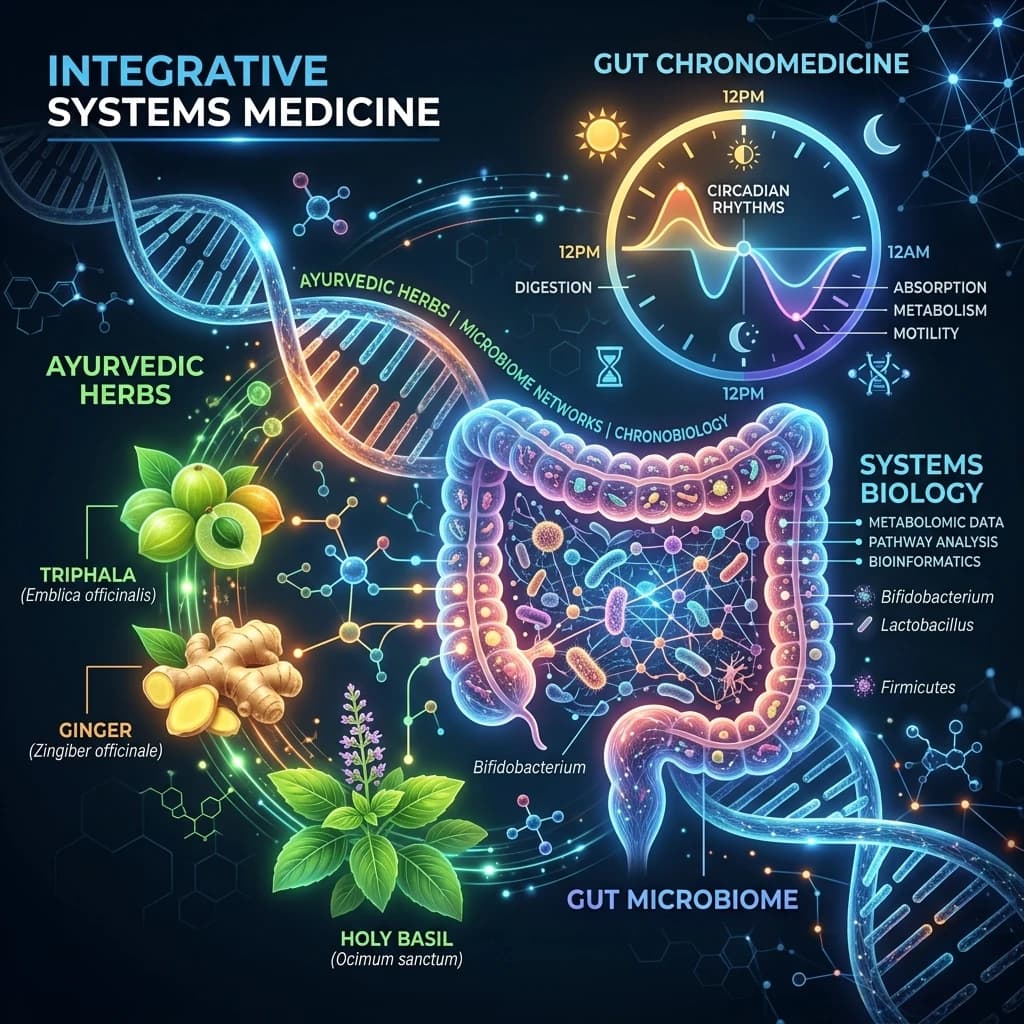
Ayurveda Meets Systems Biology: Agni, Chronomedicine, and Botanical Synergy in Modern Clinical Science
Ayurveda Meets Systems Biology: Agni, Chronomedicine, and Botanical Synergy in Modern Clinical Science The 2025–2026 wave of systems biology research has made an unambiguous statement: the three pilla…