Science-Backed Ayurveda: Clinical Studies Validate Yashtimadhu for GERD, Musta for Cholesterol, and Brahmi for Mild Cognitive Impairment

Science-Backed Ayurveda: Clinical Studies Validate Yashtimadhu for GERD, Musta for Cholesterol, and Brahmi for Mild Cognitive Impairment
In an era dominated by synthetic pharmaceuticals, the search for natural, sustainable, and evidence-based health solutions has led global researchers back to traditional systems of medicine. Ayurveda, the ancient Indian science of life, offers a wealth of knowledge on using botanicals and lifestyle adjustments to restore equilibrium within the body. Today, modern science is increasingly bridging the gap between traditional wisdom and clinical validation, employing randomized controlled trials and advanced diagnostic assays to examine how these ancient remedies work at a cellular level.
This article reviews three groundbreaking clinical developments that validate key Ayurvedic therapeutics. From treating chronic gastrointestinal discomfort and hyperacidity with Yashtimadhu to regulating circulating blood lipids with Musta, and preserving memory in early cognitive decline with Brahmi, these peer-reviewed studies offer robust evidence for integrating Ayurvedic principles into modern, holistic healthcare models.
🌿 Soothing the Burn: Yashtimadhu (Licorice) Confirmed for Amlapitta (GERD)
Gastroesophageal reflux disease (GERD) and hyperacidity—known in Ayurveda as Amlapitta—are among the most common digestive issues in modern society, often driven by chronic stress, erratic dietary habits, and processed foods. While modern medicine relies heavily on proton pump inhibitors (PPIs) which can disrupt long-term nutrient absorption and gastric pH, traditional medicine utilizes Yashtimadhu (Glycyrrhiza glabra, or licorice) to soothe the gastrointestinal lining. A clinical study published in early 2026 evaluated the efficacy of Yashtimadhu as a single-drug therapy, demonstrating remarkable therapeutic outcomes.
In this study, participants suffering from Amlapitta were administered 3 grams of Yashtimadhu Churna (root powder) twice daily for a period of 21 days. The results showed a statistically significant reduction in major symptoms, including heartburn, indigestion, acid regurgitation, and epigastric discomfort. By the end of the three-week intervention, patients reported marked improvement in overall digestive ease and a substantial decrease in the frequency of acid reflux episodes, showcasing the herb’s potential as a safe and reliable first-line digestive aid.
Ayurvedically, Yashtimadhu is prized for its sweet taste (Madhura rasa), heavy and oily qualities (Guru and Snigdha gunas), and cooling potency (Sheeta virya). These energetic properties directly counteract the hot, sharp, and sour qualities of aggravated Pitta dosha in the stomach (Amashaya). Yashtimadhu is also classified as a Vranaropana (wound-healing) herb, meaning it actively supports the healing of irritated mucosal linings and micro-ulcerations, serving as an exceptional natural buffer that balances the digestive fire (Agni) without shutting it down.
Modern pharmacological research explains these clinical results through Yashtimadhu's rich content of glycyrrhizin, flavonoids, and chalcones. These active compounds act as natural demulcents, stimulating mucus production and improving local microcirculation in the stomach lining. By reinforcing the mucosal barrier, Yashtimadhu protects the delicate esophageal tissue from acid irritation. Unlike PPIs, which suppress the stomach acid necessary for protein breakdown and pathogen defense, Yashtimadhu acts as a biological shield, soothing irritation while preserving normal digestive function.
🍂 Scraping Away Cholesterol: Musta (Nut Grass) and Lipids
Dyslipidemia and hypercholesterolemia are primary risk factors for cardiovascular disease, often requiring lifelong statin therapy. In Ayurvedic cardiology, lipid accumulation is viewed as a disorder of Medas (fatty tissue) and Ama (metabolic toxins) blocking the microchannels (Srotas). A clinical study published in April 2026 has brought Musta (Cyperus rotundus), a common nut grass, into the spotlight as a powerful therapeutic agent for metabolic purification (Paachana Karma), providing solid evidence of its lipid-lowering capabilities.
The clinical trial evaluated the metabolic effects of Musta Churna in patients diagnosed with mild-to-moderate dyslipidemia. Over a 60-day intervention period, participants received standardized daily doses of the herb. The biochemical evaluations conducted post-trial revealed a significant decrease in total cholesterol, low-density lipoprotein (LDL) cholesterol, and serum triglycerides. Additionally, the study noted improvements in digestive markers, suggesting that Musta's lipid-clearing effect begins with the optimization of systemic metabolism.
Musta's clinical success lies in its traditional classification as a Lekhana (scraping) and Pachana (metabolic digesting) herb. Characterized by its bitter, pungent, and astringent tastes (Tikta, Katu, and Kashaya rasas), along with light and dry qualities (Laghu and Ruksha gunas), Musta acts as a metabolic scraper. It directly pacifies Kapha and Pitta doshas, targeting the dense, sluggish qualities of lipid accumulation and clearing obstructions in the circulatory channels to restore natural energy flow.
From a biochemical perspective, Musta is rich in sesquiterpenes, polyphenols, and flavonoids, which exert strong antioxidant and anti-inflammatory effects. These active compounds help regulate the liver's lipid synthesis, potentially modulating HMG-CoA reductase—the enzyme responsible for cholesterol production—in a gentle, balanced manner. By preventing lipid peroxidation and supporting hepatic detoxification, Musta helps clear low-density lipoproteins from the bloodstream, validating its traditional role as a metabolic purifier.
🧠 Brain Preservation: Brahmi (Bacopa monnieri) Equivalency to Donepezil
Cognitive decline, mild cognitive impairment (MCI), and Alzheimer's disease present some of the greatest challenges to healthy aging, with limited pharmaceutical options. In traditional Indian medicine, Brahmi (Bacopa monnieri) has been utilized for millennia to enhance intellect, memory, and longevity. A landmark Phase 2b randomized controlled clinical trial reported in 2026 put Brahmi to the ultimate test by comparing its efficacy directly against donepezil, a standard pharmaceutical cholinesterase inhibitor used to manage early-stage dementia.
The year-long comparative study monitored patients with early MCI and mild Alzheimer's disease, splitting them into groups receiving either 300 mg of standardized Brahmi extract daily or 10 mg of donepezil daily. After 12 months of continuous monitoring, the researchers found no statistically significant difference in the rate of change in cognitive assessment scores between the Brahmi group and the donepezil group. This trial demonstrates that Brahmi is clinically equivalent to standard pharmaceutical care in slowing cognitive decline, offering a natural option with a significantly lower side-effect profile.
Ayurveda classifies Brahmi as a premier Medhya Rasayana—a rejuvenating tonic specifically targeted at the nervous system, memory, and intellect. Possessing bitter and astringent tastes (Tikta and Kashaya rasas) and a cooling potency (Sheeta virya), Brahmi balances all three doshas. It is particularly renowned for soothing Sadhaka Pitta (the subdosha of Pitta that governs intellect, cardioneural connections, and emotional processing) and stabilizing Prana Vata (the subdosha of Vata that regulates the central nervous system and sensory perception).
Modern neuroscience attributes Brahmi’s clinical performance to its active steroidal saponins, known as bacosides. Bacosides help repair damaged neurons, enhance synaptic transmission, and stimulate the expression of brain-derived neurotrophic factor (BDNF), which is essential for neuroplasticity. Furthermore, Brahmi acts as a natural acetylcholinesterase inhibitor, preventing the breakdown of acetylcholine—a critical neurotransmitter for memory—matching the primary mechanism of donepezil. By combining this action with powerful antioxidant defenses against beta-amyloid plaque-induced oxidative stress, Brahmi offers comprehensive, multi-targeted neuroprotection.
📌 The Bottom Line
- yashtimadhu-acid-reflux: A 2026 clinical study confirms that 3g of Yashtimadhu powder twice daily significantly reduces heartburn and GERD symptoms within 21 days by protecting the gastric mucosa.
- musta-cholesterol-metabolism: Clinical trials demonstrate that Musta Churna acts as a potent metabolic scraper, significantly lowering total cholesterol, LDL, and triglycerides over a 60-day period.
- brahmi-mild-cognitive-impairment: A Phase 2b RCT shows Brahmi extract is clinically equivalent to the pharmaceutical drug donepezil in maintaining cognitive scores over one year in patients with early cognitive decline.
Disclaimer: The information provided in this post is for educational and informational purposes only. It is not intended to be a substitute for professional medical advice, diagnosis, or treatment. Always seek the advice of your physician or other qualified health provider with any questions you may have regarding a medical condition.
Enjoyed this post?
Get our weekly digest delivered free.
Share this post:
Knowelth is reader-supported. We may earn a commission from links in this article at no extra cost to you. Read our disclosure.
Related Posts
Systems Biology, Circadian Dinacharya, and Gut-Agni Chrono-Nutrition: The Science Validating Ayurvedic Medicine
Systems Biology, Circadian Dinacharya, and Gut-Agni Chrono-Nutrition: The Science Validating Ayurvedic Medicine Modern healthcare is undergoing a paradigm shift from reductionist single-molecule thera…
Clinical Validation in Ayurveda: Cardiometabolic Formulations, Chrononutrition Agni Science, and Ayurgenomics in Ovarian Reserve
Clinical Validation in Ayurveda: Cardiometabolic Formulations, Chrononutrition Agni Science, and Ayurgenomics in Ovarian Reserve Traditional Indian medicine is undergoing a profound scientific renaiss…
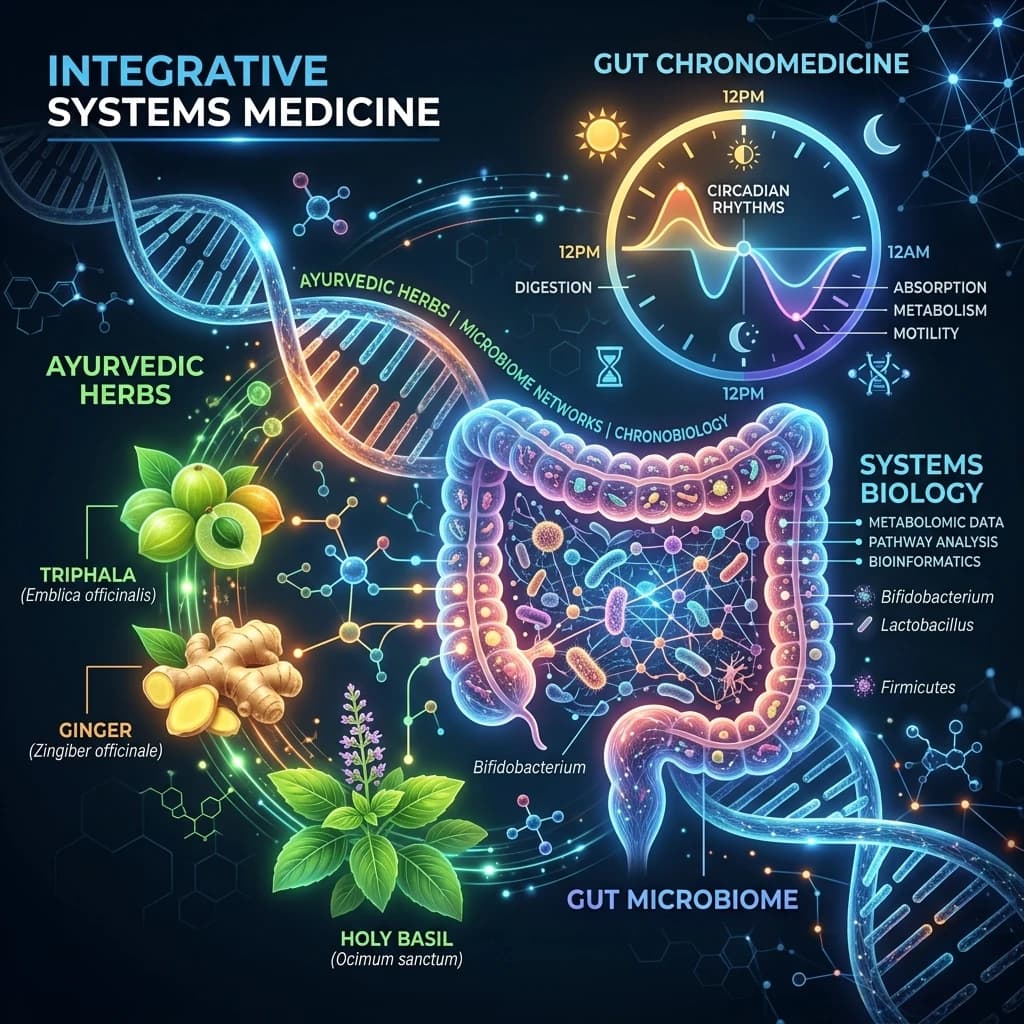
Ayurveda Meets Systems Biology: Agni, Chronomedicine, and Botanical Synergy in Modern Clinical Science
Ayurveda Meets Systems Biology: Agni, Chronomedicine, and Botanical Synergy in Modern Clinical Science The 2025–2026 wave of systems biology research has made an unambiguous statement: the three pilla…