Breaking: US Launches New Strikes on Iran Coastline After Tanker Missile Attacks
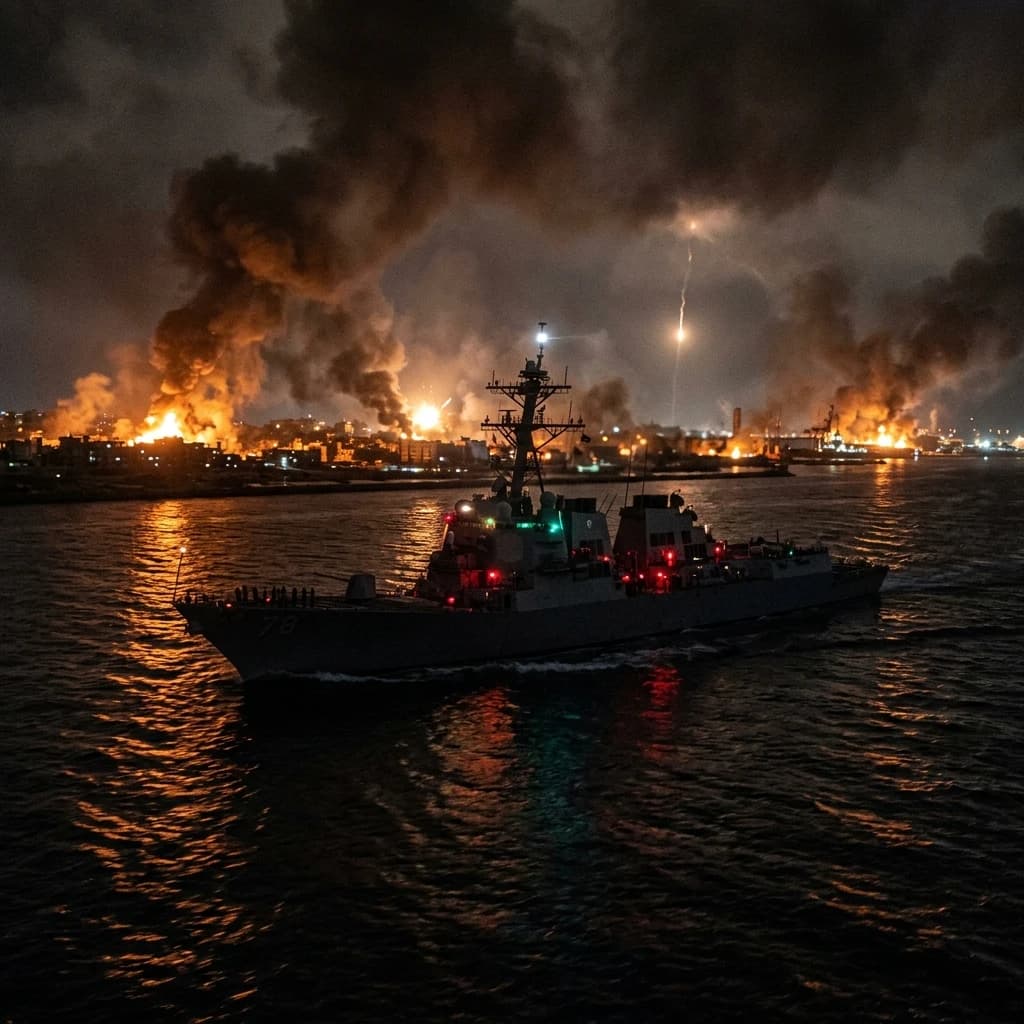
Breaking: US Launches New Strikes on Iran Coastline After Tanker Missile Attacks
Last updated: 2026-07-14 15:10 IST
The United States military has launched a third consecutive night of airstrikes against targets along the southern coastline of Iran, following Iranian cruise missile attacks on two commercial oil tankers in the Strait of Hormuz. The strikes, aimed at degrading Iran's capacity to threaten international shipping, have pushed West Asia to the brink of a broader conflict, prompting India to summon Iranian diplomats after an Indian sailor was killed in the tanker attack.
What Happened
In the late hours of July 13 and early morning of July 14, 2026, U.S. forces conducted a series of precision airstrikes against Iranian coastal defense systems, missile and drone sites, and maritime capabilities. The strikes targeted military facilities near Bandar Abbas, Bushehr, Jask, Konarak, and several islands in the Persian Gulf. According to U.S. Central Command, the operations represent the third consecutive night of strikes designed to degrade the Islamic Revolutionary Guard Corps (IRGC) ability to disrupt commercial shipping in the Strait of Hormuz.
This latest round of military actions was triggered by a high-stakes escalation in the strait. On July 13-14, Iranian cruise missiles struck two United Arab Emirates (UAE)-flagged oil tankers—the Mombasa and the Al Bahiyah—while they transited the southern shipping lane of the Strait of Hormuz in Omani territorial waters. The attack resulted in the death of an Indian crew member aboard the Mombasa, with eight other crew members sustaining injuries, including six Indian nationals and two Ukrainian nationals.
In response, President Donald Trump announced the reinstatement of a U.S. naval blockade on major Iranian ports and proposed a 20% security fee on commercial vessels passing through the Strait of Hormuz to offset the cost of U.S. protection. The conflict has since expanded, with reports of Iranian drone and missile strikes targeting U.S. and allied facilities in Jordan, Kuwait, and Bahrain.
Why It Matters
The resumption of hostilities marks the complete collapse of the fragile ceasefire established under the June 2026 Memorandum of Understanding (MoU). By transitioning from maritime skirmishes to direct airstrikes on Iranian soil and imposing a formal naval blockade, the U.S. has significantly heightened the risk of a full-scale regional war.
Furthermore, the unilateral implementation of a 20% cargo transit fee on commercial shipping in the Strait of Hormuz—a crucial maritime chokepoint through which 20% of the world's petroleum flows—directly challenges international maritime law, specifically the right of transit passage under the United Nations Convention on the Law of the Sea (UNCLOS).
Global energy markets reacted immediately to the instability, with crude oil prices surging as tanker traffic in the region ground to a near-halt. Shipping companies are facing soaring insurance premiums and are actively considering rerouting commercial fleets around the Cape of Good Hope, which would severely impact global supply chains and renew inflationary pressures worldwide.
Key Figures & Reactions
- U.S. Central Command (CENTCOM): Confirmed the strikes, stating they were necessary to protect commercial navigation and degrade offensive Iranian capabilities.
- Indian Ministry of External Affairs (MEA): Summoned Iran’s Deputy Chief of Mission in New Delhi, Mohammad Javad Hosseini, to lodge a strong formal protest over the death of the Indian sailor, expressing deep condemnation of attacks on civilian merchant shipping.
- Iranian Ministry of Foreign Affairs: Condemned the U.S. airstrikes as a flagrant violation of national sovereignty and warned that Iran will defend its territorial waters against any "illegal" naval blockades.
- United Arab Emirates (UAE) Government: Condemned the missile strikes on the Mombasa and the Al Bahiyah as a "blatant violation of international law," asserting its right to take necessary actions to safeguard its maritime assets.
What to Watch Next
- UN Security Council Intervention: Whether an emergency meeting will be convened to address the legality of the U.S. blockade and the proposed 20% transit fee.
- U.S. Actions on Suspected Nuclear Sites: Development regarding U.S. warnings of potential strikes on "Pickaxe Mountain," which is suspected of housing a hidden nuclear enrichment facility.
- Commercial Fleet Rerouting: Whether shipping conglomerates will comply with the U.S. security fee or begin massive rerouting around Africa, bypassing the Middle East entirely.
This is a developing story. Details may be updated as new information emerges.
Enjoyed this post?
Get our weekly digest delivered free.
Share this post:
Knowelth is reader-supported. We may earn a commission from links in this article at no extra cost to you. Read our disclosure.
Related Posts
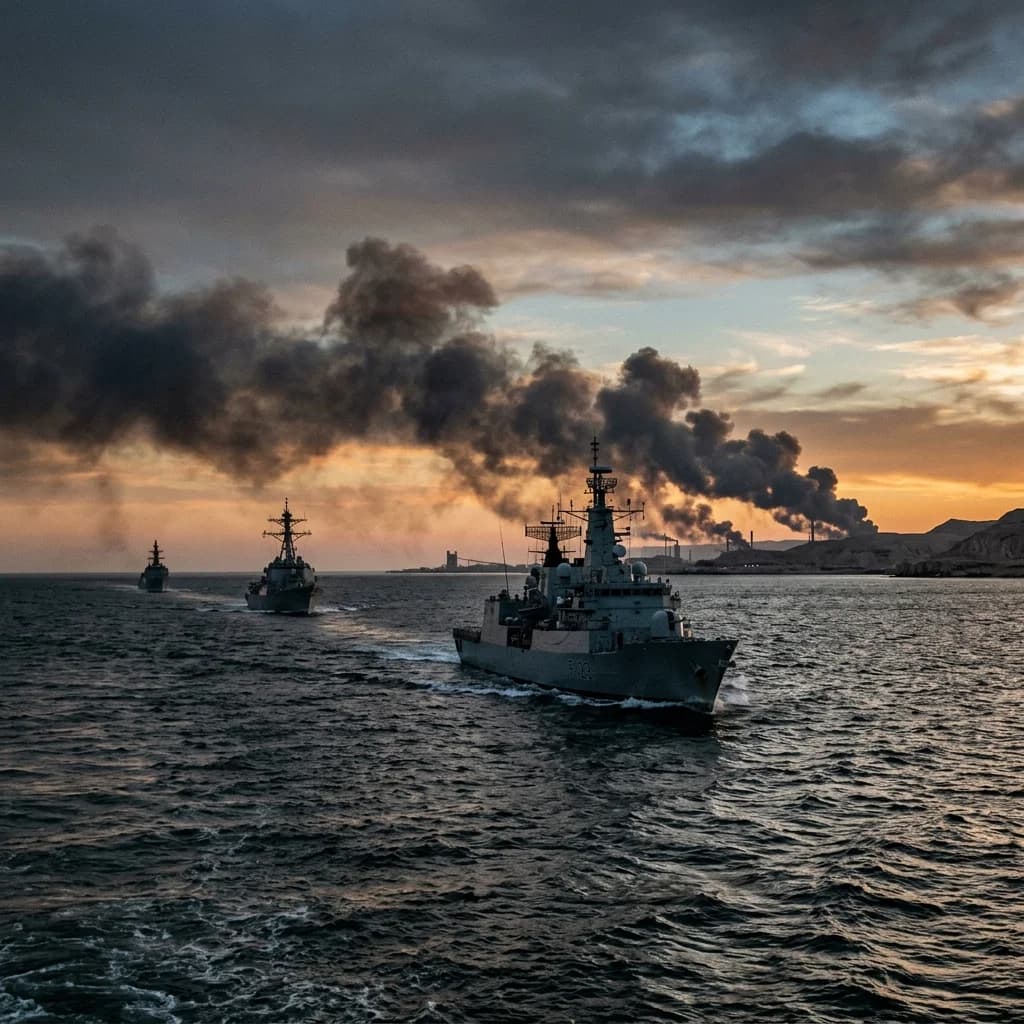
US Launches Sixth Night of Airstrikes on Iran as Strait of Hormuz Crisis Deepens
Breaking: US Launches Sixth Night of Airstrikes on Iran as Strait of Hormuz Crisis Deepens Last updated: 2026-07-17 16:20 IST The United States has expanded its military campaign against Iran, launchi…

China's AI Governance Vision, US Proposes 100% Tariff on Russian Oil Buyers, and a Historic Species Discovery in the Western Ghats
China's AI Governance Vision, US Proposes 100% Tariff on Russian Oil Buyers, and a Historic Species Discovery in the Western Ghats The global geopolitical, technological, and environmental landscape i…

Breaking: U.S. Strike Near Ahvaz Hospital Forces Evacuation of 211 Pediatric Cancer Patients
Breaking: U.S. Strike Near Ahvaz Hospital Forces Evacuation of 211 Pediatric Cancer Patients Last updated: 2026-07-16 23:45 IST An emergency evacuation of 211 pediatric cancer patients was carried out…