Breaking: US Resumes Iran Blockade as IRGC Retaliates with Missile Strikes on Gulf Bases
Breaking: US Resumes Iran Blockade as IRGC Retaliates with Missile Strikes on Gulf Bases
Last updated: 2026-07-15 12:05 IST
A major military confrontation has erupted in the Middle East as the United States Central Command (CENTCOM) concluded a major wave of airstrikes against Iranian positions, and reinstated a naval blockade on all vessels transiting to or from Iranian ports. In rapid retaliation, Iran's Islamic Revolutionary Guard Corps (IRGC) launched barrage missile attacks targeting U.S. military facilities in Bahrain, Kuwait, and Jordan, marking a severe escalation in direct conflict between the two nations.
What Happened
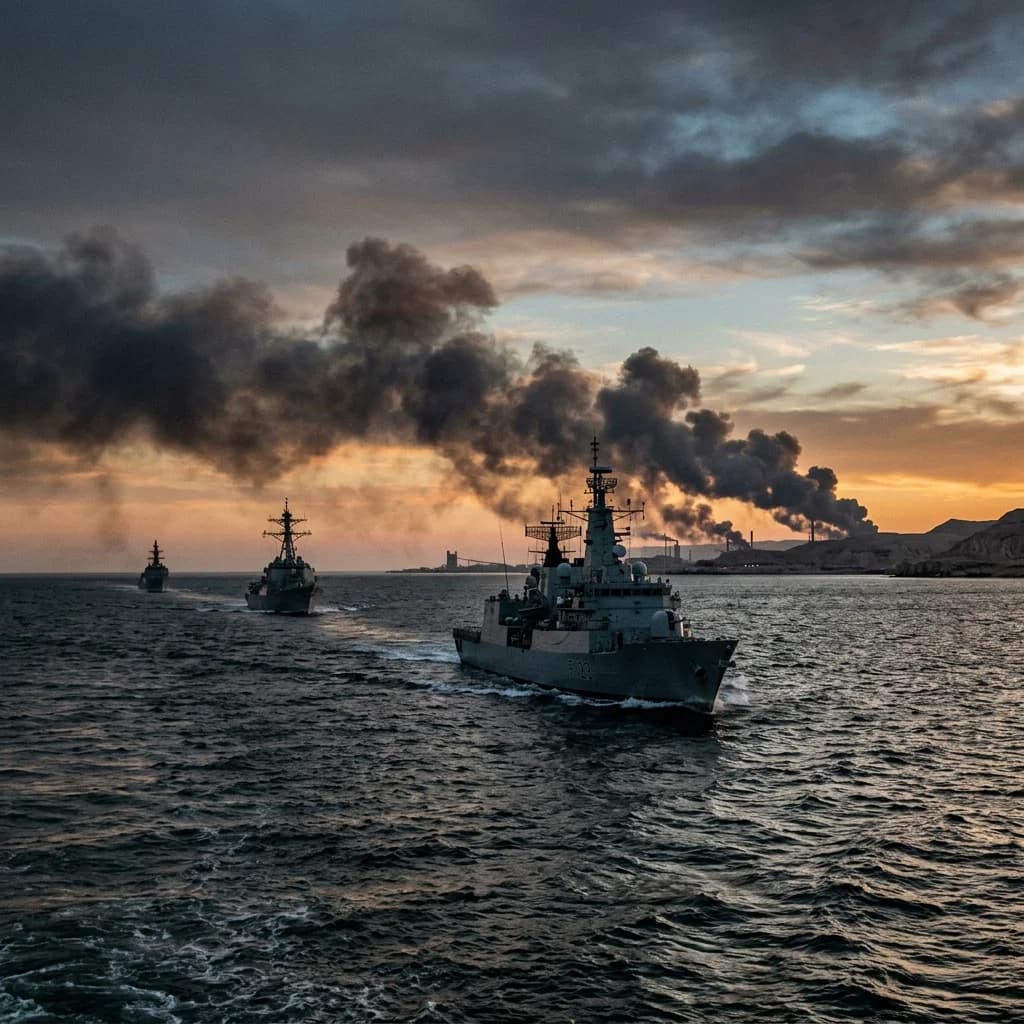
On the evening of July 14, 2026, U.S. Central Command (CENTCOM) executed a massive seven-hour series of coordinated airstrikes targeting Iranian military assets near the Strait of Hormuz and along the Iranian coast. According to official Pentagon briefings, the operation concluded at 10:00 p.m. EST and successfully degraded Iranian coastal defense systems, naval capabilities, and active drone and missile launch sites. Concurrently, the United States resumed a strict naval blockade prohibiting any commercial or military transit to or from Iranian ports.
Hours after the U.S. airstrikes, the Islamic Revolutionary Guard Corps (IRGC) launched retaliatory ballistic missile and drone salvos against key U.S. military installations across the Gulf region. The IRGC claimed to have caused "heavy damage" to the headquarters of the U.S. Navy's Fifth Fleet in Bahrain, as well as the Ali Al Salem Air Base in Kuwait and the al-Azraq base in Jordan.
In neighboring Jordan, the military confirmed it successfully intercepted three Iranian ballistic missiles that breached its airspace. However, the maritime impact in the Strait of Hormuz resulted in direct casualties; an Indian national was reported killed and ten others injured following Iranian attacks on commercial oil tankers transiting the waterway.
Why It Matters
The resumption of a naval blockade by the U.S. and direct retaliatory strikes by Iran on sovereign Gulf nations hosting U.S. forces represents a complete collapse of recent diplomatic ceasefires. By targetting vital military hubs like the Fifth Fleet headquarters in Bahrain, Iran has demonstrated a willingness to expand the geographic scope of the theater of operations.
The closure of the Strait of Hormuz—the world's most critical oil transit chokepoint—coupled with threats from Iran to disrupt alternative energy export routes in the region, poses an immediate threat to global energy supplies and maritime stability. The escalation has also drawn regional actors, like Jordan and India, directly into the diplomatic and military fallout.
Key Figures & Reactions
- U.S. President Donald Trump: Stated that the military campaign will continue "until further notice," warning that the U.S. forces are prepared to expand targeting to critical Iranian civilian and energy infrastructure—including power plants and bridges—if Tehran does not agree to a comprehensive deal.
- Iranian IRGC Command: Announced that any nation facilitating or hosting U.S. strikes would face direct retaliation, warning that alternative regional energy corridors will be disrupted if the U.S. blockade is not lifted.
- Government of India: Summoned the Iranian deputy envoy in New Delhi to lodge a formal and strong protest following the death of an Indian national and the injury of ten others in the tanker attacks.
- Jordanian Armed Forces: Issued a statement confirming the interception of three missiles over its territory, reiterating Jordan’s resolve to defend its airspace against any violations.
What to Watch Next
- U.S. Escalation of Targets: Whether the U.S. military executes plans to strike Iranian infrastructure such as power grids and transportation bridges.
- Global Oil Market Reaction: The response of global energy markets to the Strait of Hormuz blockade and the potential disruption of shipments.
- Diplomatic Pressure on Tehran: International diplomatic maneuvers by India and other neutral countries to secure their citizens and de-escalate maritime hostilities.
This is a developing story. Details may be updated as new information emerges.
Enjoyed this post?
Get our weekly digest delivered free.
Share this post:
Knowelth is reader-supported. We may earn a commission from links in this article at no extra cost to you. Read our disclosure.
Related Posts
US Launches Sixth Night of Airstrikes on Iran as Strait of Hormuz Crisis Deepens
Breaking: US Launches Sixth Night of Airstrikes on Iran as Strait of Hormuz Crisis Deepens Last updated: 2026-07-17 16:20 IST The United States has expanded its military campaign against Iran, launchi…

China's AI Governance Vision, US Proposes 100% Tariff on Russian Oil Buyers, and a Historic Species Discovery in the Western Ghats
China's AI Governance Vision, US Proposes 100% Tariff on Russian Oil Buyers, and a Historic Species Discovery in the Western Ghats The global geopolitical, technological, and environmental landscape i…

Breaking: U.S. Strike Near Ahvaz Hospital Forces Evacuation of 211 Pediatric Cancer Patients
Breaking: U.S. Strike Near Ahvaz Hospital Forces Evacuation of 211 Pediatric Cancer Patients Last updated: 2026-07-16 23:45 IST An emergency evacuation of 211 pediatric cancer patients was carried out…