Salt Clouds on the Pink Planet, Reaffirming Cosmic Acceleration, and Reversing Mitochondrial Aging
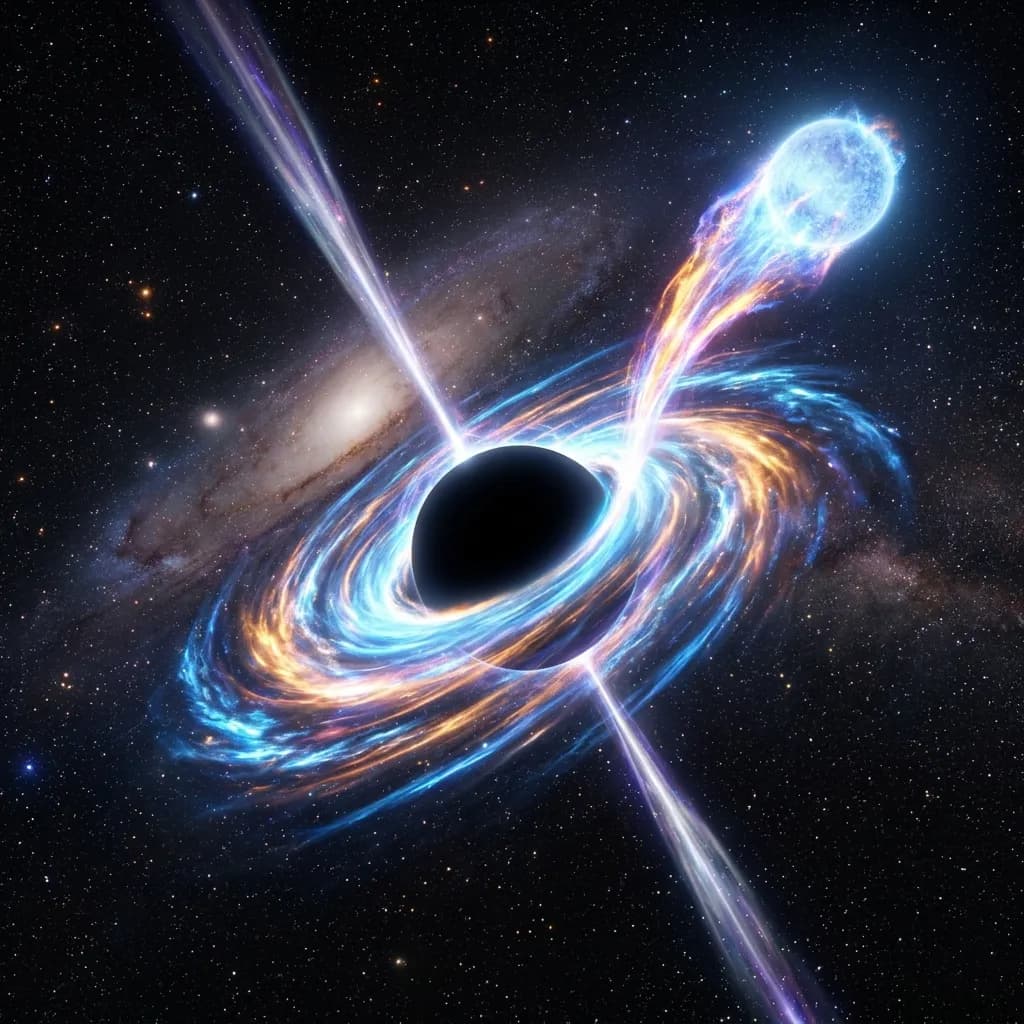
Salt Clouds on the Pink Planet, Reaffirming Cosmic Acceleration, and Reversing Mitochondrial Aging
This week, science makes monumental strides across three distinct frontiers: from cosmic-scale observations of alien atmospheres, to a rigorous resolution of the dark energy debate, to key biological insights that could reverse cellular decay. Together, these breakthroughs showcase how humanity is progressively decoding and mastering the complex systems that shape our universe, our cosmological models, and the metabolic foundations of aging.
🔭 Shimmering in the Pink: JWST Detects Elusive Salt Clouds on GJ 504b
GJ 504b, located approximately 57 light-years away in the constellation Virgo, has long captured the public imagination. Discovered in 2013, this young planetary-mass companion—sitting right on the boundary between a massive gas giant and a lightweight brown dwarf—glows with a striking magenta or pinkish hue, a result of the heat left over from its relatively recent formation. However, studying the fine details of its atmosphere has historically been a monumental challenge. Due to its cool temperature of roughly 550°F (290°C) and its proximity to a bright, sun-like host star, ground-based telescopes struggled to resolve its faint, diffuse light, leaving astronomers guessing about the chemical composition of its outer layers.
That mystery has now been resolved. In a study published in The Astronomical Journal on June 18, 2026, an international research team led by astronomers at Northwestern University announced that they had successfully captured the detailed spectral signature of GJ 504b using the James Webb Space Telescope (JWST). Impressively, the telescope's unmatched sensitivity allowed it to collect the necessary data in just two hours of observation time. The spectroscopy revealed a rich mixture of atmospheric molecules, including water vapor, methane, carbon dioxide, and ammonia, providing a comprehensive chemical inventory of this cold, alien world.
However, the most surprising revelation was the presence of salt clouds. When researchers attempted to fit standard atmospheric models to the JWST data, the simulated spectra consistently failed to match the observations until they introduced a layer of mineral clouds. Specifically, the model pointed to clouds composed of halite (sodium chloride), potassium chloride, or manganese sulfide. Unlike Earth's clouds of water vapor, these "salty" clouds form at much higher temperatures deep within the atmosphere, where they condense from vaporized salts and act as a thick blanket that silences or dampens the spectral signatures of the gases lying beneath them.
This discovery represents a major milestone for exoplanetary science. The existence of salt clouds on cool gas giants was predicted theoretically over fifteen years ago, but observing them was impossible with older instruments. By confirming their presence on GJ 504b, JWST has validated key models of planetary atmospheres and opened up a new avenue for exploring the climates of cold, distant worlds. It highlights how the telescope is steadily transforming our understanding of planetary systems, showing that even the most exotic atmospheric phenomena can be dissected and understood.
🌌 The Cosmos Accelerated: New Study Reaffirms Dark Energy Against Cosmic Challenges
In the late 1990s, astrophysics was turned on its head when two independent teams of researchers discovered that the expansion of the universe was not slowing down under the influence of gravity, but was actually accelerating. This discovery, which earned the Nobel Prize in Physics in 2011, led to the concept of dark energy—a mysterious force that makes up roughly 68% of the universe. However, in late 2025, a team of researchers from Yonsei University challenged this foundation, publishing a study suggesting that the evidence for accelerating expansion was weakening. They argued that Type Ia supernovae, the "standard candles" used to measure cosmic distances, vary in brightness depending on the age of their host galaxies, a factor they claimed previous studies had failed to account for.
The claim sparked intense debate within the scientific community, threatening to derail the standard model of cosmology ($\Lambda\text{CDM}$). To address this challenge, an international collaboration led by researchers at the University of Southampton, which included Nobel laureates Adam Riess and Brian Schmidt, undertook a rigorous re-examination of the supernova data. Their findings, published in the Monthly Notices of the Royal Astronomical Society (MNRAS) in June 2026, have firmly refuted the 2025 challenge. The team demonstrated that the previous study contained critical methodology errors, particularly in how it estimated the ages of host galaxies and calibrated the intrinsic luminosity of the supernovae.
When these errors were corrected, the correlation between supernova brightness and host galaxy age disappeared, and the evidence for dark energy remained as robust as ever. The researchers compared the situation to calibrating a set of light bulbs: if you don't properly account for the electrical current (or in this case, the galaxy's stellar evolution), you might conclude the bulb is dimmer or brighter than it actually is. By showing that the 2025 "crisis" was the result of systematic calibration errors rather than a fundamental flaw in the cosmological model, the new study has restored confidence in our standard picture of the universe's history and future.
"This is how science works," remarked one of the lead authors of the study. "Extraordinary claims require extraordinary evidence, and when a fundamental pillar of physics is challenged, it must be double-checked." The resolution of this debate not only reinforces the reality of dark energy but also underscores the importance of data validation in the era of high-precision cosmology. The accelerating expansion of the universe remains one of the most secure discoveries of modern astrophysics.
🔋 Restoring the Cellular Engine: Mitigating Mitochondrial Aging via Lipid Supplementation
Aging is often viewed as an inevitable process of decay, driven by the slow accumulation of irreversible genetic damage. At the center of this decay are mitochondria, the powerhouses of our cells, which gradually lose their efficiency as we grow older. This mitochondrial dysfunction is a hallmark of natural aging and is linked to a wide range of age-related diseases, from neurodegeneration to cardiovascular decline. While scientists have long sought ways to restore mitochondrial function, the underlying mechanisms driving their structural collapse have remained elusive.
A groundbreaking study published in Nature Communications by researchers at the Leibniz Institute on Aging – Fritz Lipmann Institute (FLI) in Jena, Germany, has revealed a surprisingly malleable driver of this process. The team, led by Dr. Maria Ermolaeva, discovered that the primary cause of age-related mitochondrial dysfunction is not permanent DNA damage, but rather a natural decline in the synthesis of phosphatidylcholine (PC)—the most abundant lipid molecule in the mitochondrial membrane. As PC levels drop, the mitochondrial membrane loses its flexibility, causing the mitochondrial network to fragment and fail.
To confirm this link, the researchers deactivated the genes responsible for PC synthesis in young model organisms (C. elegans) and human cell cultures. Almost immediately, the mitochondria in these young cells began to fragment and exhibit the telltale signs of advanced aging. More importantly, the researchers discovered that this process is reversible. By supplementing the diet of aging roundworms with phosphatidylcholine or its chemical precursor, choline, they were able to restore the integrity of the mitochondrial membranes, repair the cellular energy networks, and significantly improve the metabolic resilience of the organisms.
This research shifts our understanding of aging from a set of permanent, irreversible genetic errors to a dynamic, lipid-dependent process that can be influenced by targeted nutritional interventions. While translating these results from roundworms and cell cultures to humans will require further study, the findings highlight a promising new strategy for combating age-related metabolic decline. By simply feeding the mitochondrial membranes the lipids they need to stay fluid, we may one day be able to keep our cellular powerhouses running smoothly well into old age.
📌 The Bottom Line
- gj504b-salt-clouds: The James Webb Space Telescope has detected direct spectroscopic evidence of salt clouds on the young, cold exoplanet GJ 504b, validating fifteen-year-old atmospheric models.
- universe-expansion-accelerated: A new study led by the University of Southampton has refuted a 2025 challenge to dark energy, reconfirming that the expansion of the universe is accelerating.
- mitochondrial-lipid-restoration: Researchers have discovered that age-related mitochondrial decay is driven by a decline in the membrane lipid phosphatidylcholine and can be reversed via dietary supplementation.
Enjoyed this post?
Get our weekly digest delivered free.
Share this post:
Knowelth is reader-supported. We may earn a commission from links in this article at no extra cost to you. Read our disclosure.
Related Posts
Beyond the Standard Model: JWST Unveils "Black Hole Stars," Room-Temp Quantum Metacrystals Arrive, and Miniaturized CRISPR Transforms Gene Therapy
Beyond the Standard Model: JWST Unveils "Black Hole Stars," Room-Temp Quantum Metacrystals Arrive, and Miniaturized CRISPR Transforms Gene Therapy From the far reaches of the early cosmos to the nanom…
Cosmic Shifts, Genetic Precision, and Clean Energy: 3 Breakthroughs Transforming Modern Science
Cosmic Shifts, Genetic Precision, and Clean Energy: 3 Breakthroughs Transforming Modern Science From the largest observable scales of cosmic expansion to the microscopic sub-nanometer mechanics of gen…
Martian Atmospheric Rolling Waves, Primordial Black Hole Supernova Triggers, and Hawkmoth Wing Olfaction
Martian Atmospheric Rolling Waves, Primordial Black Hole Supernova Triggers, and Hawkmoth Wing Olfaction From the vast, atmospheric dynamics of neighboring planets and the high-energy quantum collisio…