OpenAI Jalapeño Chip, Alphabet's $84.75B Raise, and Daybreak Cybersecurity

OpenAI Jalapeño Chip, Alphabet's $84.75B Raise, and Daybreak Cybersecurity
Three reinforcing developments in the final week of June 2026 define the transition from software-era to infrastructure-era AI. OpenAI's "Jalapeño" custom ASIC — designed in 9 months with Broadcom + Celestica and targeting 50% inference cost reduction — challenges Nvidia's GPU monopoly at the silicon level; Alphabet's unprecedented $84.75B equity raise (including $10B from Berkshire Hathaway) makes AI infrastructure the largest single capital deployment in corporate history; and OpenAI's Daybreak "Patch the Planet" campaign demonstrates autonomous vulnerability remediation at planetary scale — 2,341 patches to critical open-source packages covering 840M downstream deployments in 2 weeks.
🤖 OpenAI Jalapeño — 9-Month ASIC Development Powered by AI-Assisted Design
How OpenAI Designed a Chip in 9 Months
Traditional semiconductor chip development takes 36–54 months from architecture specification to tape-out (manufacturing handoff). OpenAI compressed this to 9 months through a novel co-design methodology: using its own reasoning models to automate the most time-consuming phases of chip design.
Traditional vs OpenAI AI-assisted chip design pipeline:
| Phase | Traditional (Human-only) | OpenAI AI-Assisted | Time Saved |
|---|---|---|---|
| Architecture specification | 6–9 months | 2 months (AI generates and evaluates architectures) | 4–7 months |
| RTL (Register Transfer Level) design | 8–12 months | 3 months (AI writes ~60% of RTL code) | 5–9 months |
| Physical design (placement + routing) | 8–12 months | 2.5 months (AI optimises layout) | 5.5–9.5 months |
| Verification and simulation | 10–18 months | 2 months (AI generates exhaustive test vectors) | 8–16 months |
| Tape-out preparation | 4–6 months | 1.5 months | 2.5–4.5 months |
| Total | 36–57 months | ~9 months | 27–48 months saved |
This is not just accelerated engineering — it is a demonstration that AI can compound its own development by building better hardware for the next generation of AI.
Jalapeño Technical Architecture — vs Nvidia H100
Why custom inference ASICs are fundamentally more efficient than general-purpose GPUs:
A GPU is a general-purpose parallel processor — designed for computer graphics, scientific computing, ML training, and inference. A custom inference ASIC strips everything except the operations used in transformer token generation:
| Silicon Area | Nvidia H100 (GPU) | Jalapeño (Inference ASIC) |
|---|---|---|
| Non-AI compute (rendering, general compute) | ~35% of die | ~3% |
| High-bandwidth memory (HBM) | 80 GB HBM3 | 192 GB HBM3e |
| Memory bandwidth | 3.35 TB/s | ~5.5 TB/s |
| On-chip SRAM | 50 MB | ~280 MB |
| Typical inference power | 700W | ~260W |
| Manufacturing node | TSMC N4 (4nm) | TSMC N3B (3nm) |
| Target cost per token (relative) | 1.0× (baseline) | ~0.5× (50% reduction) |
The partnership structure:
- Broadcom: Custom ASIC design (silicon implementation, Tomahawk 5 network switching, advanced packaging via CoWoS-L)
- Celestica: System integration — server boards, rack-level thermal management, power delivery for Jalapeño-based data centre pods
- TSMC: Manufacturing (N3B process, volume production from Q3 2027)
- Microsoft Azure: Primary deployment partner — Jalapeño pods will be deployed in Azure data centres alongside OpenAI's own facilities
Commercial impact — OpenAI's economics: Estimated OpenAI inference cost (2026, pre-Jalapeño): ~$800M–$1B/year on rented H100/H200 GPU capacity from Microsoft Azure. A 50% reduction = $400–500M annual savings — equivalent to funding an entire GPT-6 training run annually.
💰 Alphabet $84.75B Raise — Structure and Strategic Rationale
The Full Capital Raise Structure
Alphabet's $84.75B equity raise — deal components:
| Component | Amount | Structure | Purpose |
|---|---|---|---|
| At-The-Market (ATM) offering | $40B | New GOOGL Class C shares sold over 90 days into open market | Maximum market pricing without large single-block discount |
| Institutional private placement | $34.75B | Block sale to sovereign wealth funds + pension funds | Immediate capital, pre-negotiated pricing |
| Berkshire Hathaway investment | $10B | Preferred convertible equity | Strategic stamp of approval from Buffett |
| Total | $84.75B |
Why Berkshire Hathaway's investment is strategically significant: Warren Buffett has historically avoided technology companies he doesn't understand (the famous "moat" test). A $10B investment in Alphabet signals that Buffett considers AI infrastructure to be a durable competitive moat — not a speculative technology bet. This framing reshaped institutional investor perception of Alphabet's capex spending from "speculative" to "infrastructure investment."
Where the $84.75B is deployed:
| Category | Amount | Specifics |
|---|---|---|
| US data centres (new construction) | $32B | 12 new hyperscale AI campuses |
| International data centres | $18B | EU, Asia-Pacific, Latin America |
| TPU v7/v8 production | $14B | TSMC 3nm → 2nm production runs |
| Private power infrastructure | $9.5B | Solar + battery + TerraPower nuclear partnership |
| Cooling (liquid cooling systems) | $5.2B | Direct-to-chip + heat recovery for district heating |
| Global network backbone | $4.75B | Subsea cables + cross-campus fibre |
| AI governance + compliance | $1.5B | EU AI Act, GDPR, national AI regulations |
| Total | $84.75B |
Strategic context — the hyperscaler capex race:
| Company | 2026 Total CapEx | Primary AI Infrastructure Focus |
|---|---|---|
| Microsoft | ~$90B | Azure + OpenAI Jalapeño pods + 5GW data centres |
| Alphabet (Google) | ~$120B (including $84.75B raise) | GCP + TPU clusters + 12 new campuses |
| Amazon AWS | ~$85B | Trainium 3 chips + Project Kuiper + Bedrock expansion |
| Meta | ~$65B | MTIA v2 chips + Llama infrastructure |
🛡️ OpenAI Daybreak — Autonomous Open-Source Security
Enjoyed this post?
Get our weekly digest delivered free.
The Open-Source Security Crisis That Daybreak Addresses
The software supply chain vulnerability scale:
| Metric | 2026 Value |
|---|---|
| Active npm packages | 3.2M |
| Active PyPI packages | 600K |
| Active crates.io packages | 145K |
| % of enterprise software relying on ≥1 open-source component | 97% |
| Average open-source CVEs filed per month (2026) | 2,800+ |
| % of CVEs addressed within 30 days (unassisted) | ~23% |
| Average time-to-patch (volunteer-maintained repos) | 64 days |
The Log4Shell (CVE-2021-44228) vulnerability demonstrated the scale of the problem: a single flaw in a widely-used logging library (400M+ downloads/day) required years of patching effort across the entire software ecosystem. Daybreak's thesis: AI can systematically patch the entire open-source ecosystem faster than attackers can exploit it.
The "Patch the Planet" autonomous pipeline:
| Step | System | Action |
|---|---|---|
| 1. Discovery | GPT-5.5-Cyber + Semgrep + CodeQL | Scans all packages in npm/PyPI/crates.io top 10,000; flags CVE-class patterns |
| 2. Triage | GPT-5.5-Cyber + CVSS scoring | Assigns exploitability score; prioritises high-impact vulns |
| 3. Exploit validation | GPT-5.5-Cyber (red-team config) | Generates working exploit in sandbox; confirms vulnerability is real and exploitable |
| 4. Patch generation | GPT-5.5-Cyber + Codex Security | Generates compilable patch; runs existing test suite; checks for new CVE introductions |
| 5. Pull request | Automated GitHub workflow | Creates PR to maintainer repo with: vulnerability description, exploit proof, proposed patch, test results |
| 6. Human review | Package maintainer | Optional — maintainer reviews and merges (or OpenAI security team for abandoned repos) |
2-week results (June 24 – July 7, 2026):
| Metric | Value |
|---|---|
| Packages scanned | Top 10,000 (npm + PyPI + crates.io) |
| Vulnerabilities discovered | 3,841 |
| Confirmed exploitable (exploit validated in sandbox) | 2,819 |
| Patches generated | 2,341 |
| Patches accepted by maintainers | 1,897 (81%) |
| Downstream deployments covered | ~840 million |
| Average time discovery → PR submission | 4.3 hours |
| Human engineer equivalent effort | ~22,000 person-hours |
📌 The Bottom Line
- openai-jalapeno-broadcom-asic: 9-month tape-out (vs 36-57 months traditionally) via AI-assisted design: architecture gen, 60% RTL code, layout optimisation, test vector generation; Jalapeño vs H100: 3% vs 35% non-AI silicon, 192 vs 80GB HBM, 5.5 vs 3.35 TB/s bandwidth, 280 vs 50MB SRAM, 260 vs 700W, TSMC N3B vs N4; 50% cost reduction = $400-500M/year savings (≈1 GPT-6 training run annually); partners: Broadcom (silicon + CoWoS-L packaging) + Celestica (server/rack) + TSMC (N3B mfg) + Microsoft Azure (deployment).
- alphabet-84b-berkshire-tpu: $84.75B = $40B ATM + $34.75B institutional placement + $10B Berkshire convertible preferred; Buffett investment = reframing from "tech speculation" to "infrastructure moat"; deployment: $32B US campuses, $18B international, $14B TPU v7/v8 at TSMC 3-2nm, $9.5B private power (solar+battery+TerraPower), $5.2B liquid cooling, $4.75B subsea+fibre, $1.5B AI Act compliance; CapEx context: Alphabet $120B total vs Microsoft $90B, AWS $85B, Meta $65B.
- daybreak-patch-planet-gpt55cyber: Open-source CVE scale: 97% enterprise software on open-source, 2,800+ CVEs/month, 64-day average patch time (volunteer repos); 6-step pipeline: Semgrep+CodeQL discovery → CVSS triage → sandbox exploit validation → Codex Security patch → GitHub PR → maintainer review; 2-week results: 10K packages scanned, 3,841 vulns found, 2,819 exploitable confirmed, 2,341 patches generated, 1,897 accepted (81%), 840M downstream deployments covered, 4.3 hours discovery-to-PR, equivalent to 22,000 human engineer-hours.
📬 Stay Updated
Get the best of AI & technology delivered to your inbox every week. Subscribe to our free newsletter →
Disclosure: This post contains affiliate links. If you purchase through our links, we earn a small commission at no extra cost to you. We only recommend products we believe in.
Technical architecture teardowns, artificial intelligence evaluations, and software benchmarks published on Knowelth reflect independent developer testing and publicly available documentation. We maintain complete editorial independence from vendor sponsorships. Read our Editorial Policy.
Enjoyed this post?
Get our weekly digest delivered free.
Share this post:
Knowelth is reader-supported. We may earn a commission from links in this article at no extra cost to you. Read our disclosure.
Related Posts
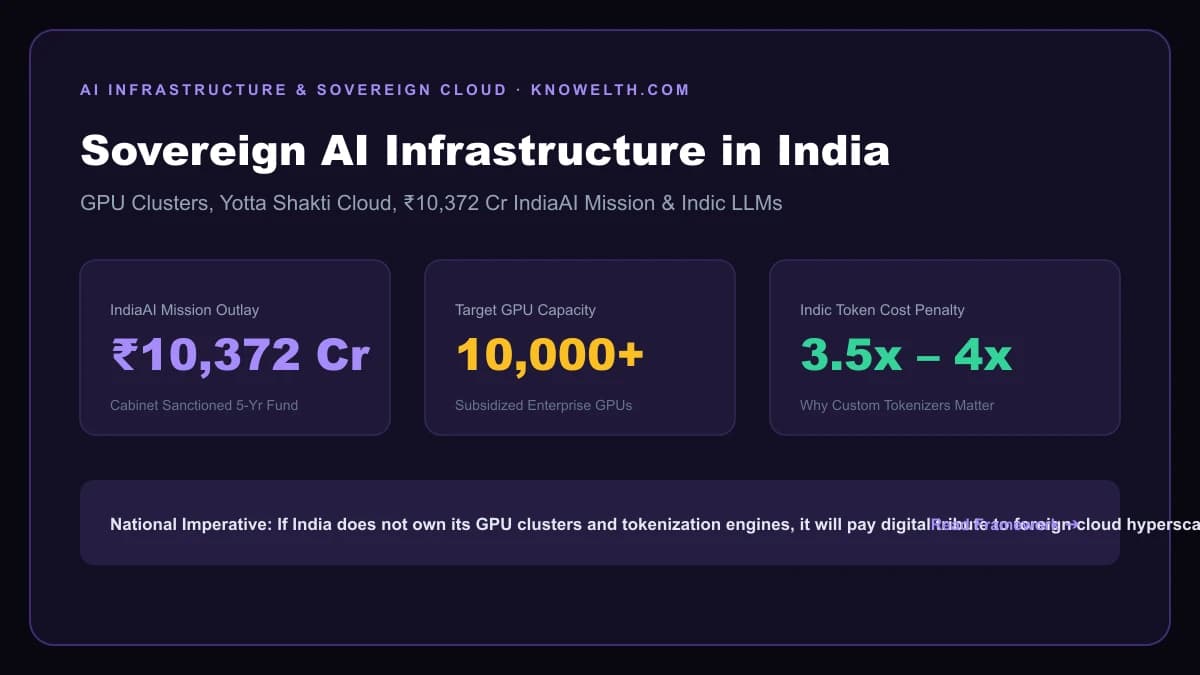
Sovereign AI India: GPU Cloud & Indic LLMs
Sovereign AI Infrastructure in India: GPU Clusters, Yotta Shakti Cloud, and Indic LLMs Quick Summary: In the global race for artificial intelligence hegemony, computing power has superseded crude oil …
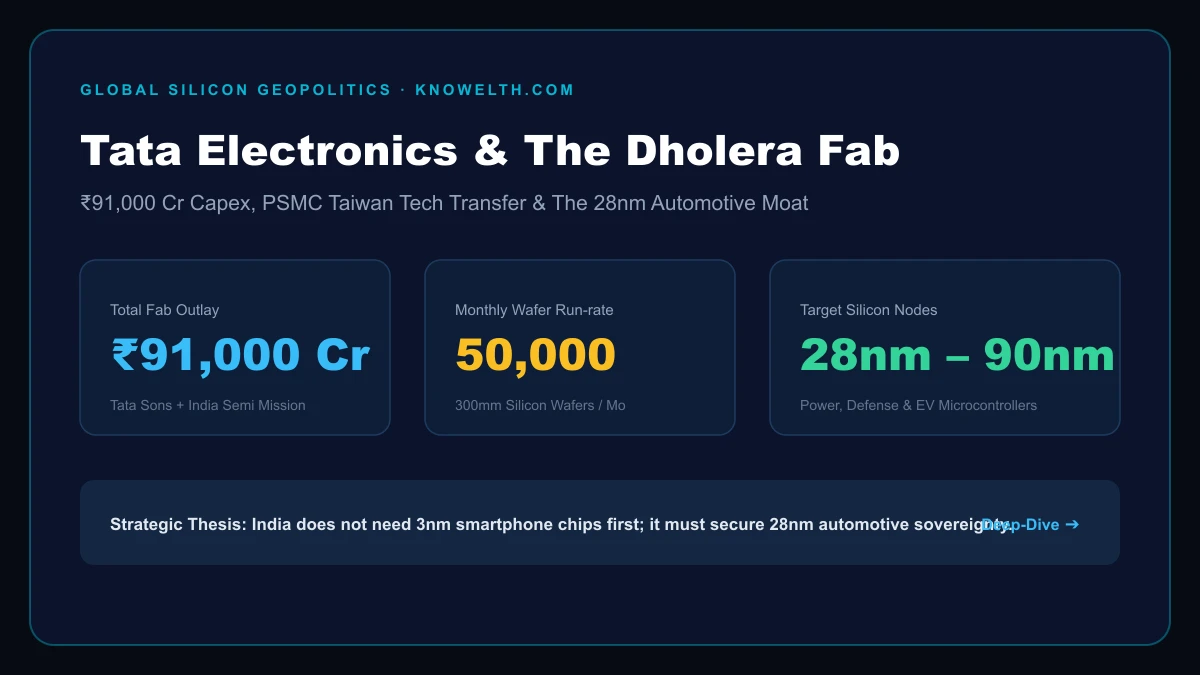
Tata Electronics & Dholera Fab: India's Chip Ambition
Tata Electronics & The Dholera Fab: Can India Break Taiwan's Semiconductor Monopoly? Quick Summary: In the arid plains of Dholera Special Investment Region (SIR) in Gujarat, Tata Electronics, in techn…

System 2 AI Architectures, NVIDIA's $500B Infrastructure Alliance, and Industrial Physical AI Scale-Up
System 2 AI Architectures, NVIDIA's $500B Infrastructure Alliance, and Industrial Physical AI Scale-Up The artificial intelligence ecosystem is undergoing a fundamental structural transformation th…