Symphonies in Soapstone, Sandstone, and Granite: The Hoysala Micro-Carvings of Belur, Pallava Sandstone Devotion at Kanchipuram, and the Chalukyan Synthesis of Pattadakal
Symphonies in Soapstone, Sandstone, and Granite: The Hoysala Micro-Carvings of Belur, Pallava Sandstone Devotion at Kanchipuram, and the Chalukyan Synthesis of Pattadakal
Across the Indian subcontinent, ancient and medieval temple complexes serve as permanent books written in stone, capturing the mathematical, geological, and artistic genius of their builders. Rather than mere places of worship, these structures represent structural achievements that pushed the boundaries of ancient engineering and material science. This week, we explore three remarkable heritage sites: the microscopically detailed soapstone carvings of Belur's Chennakeshava Temple, the early Dravidian sandstone structures of Kanchipuram's Kailasanathar Temple, and the imperial victory monument and artistic synthesis of Pattadakal's Virupaksha Temple.
🏛️ The Star-Shaped Soapstone Symphony: Chennakeshava Temple of Belur
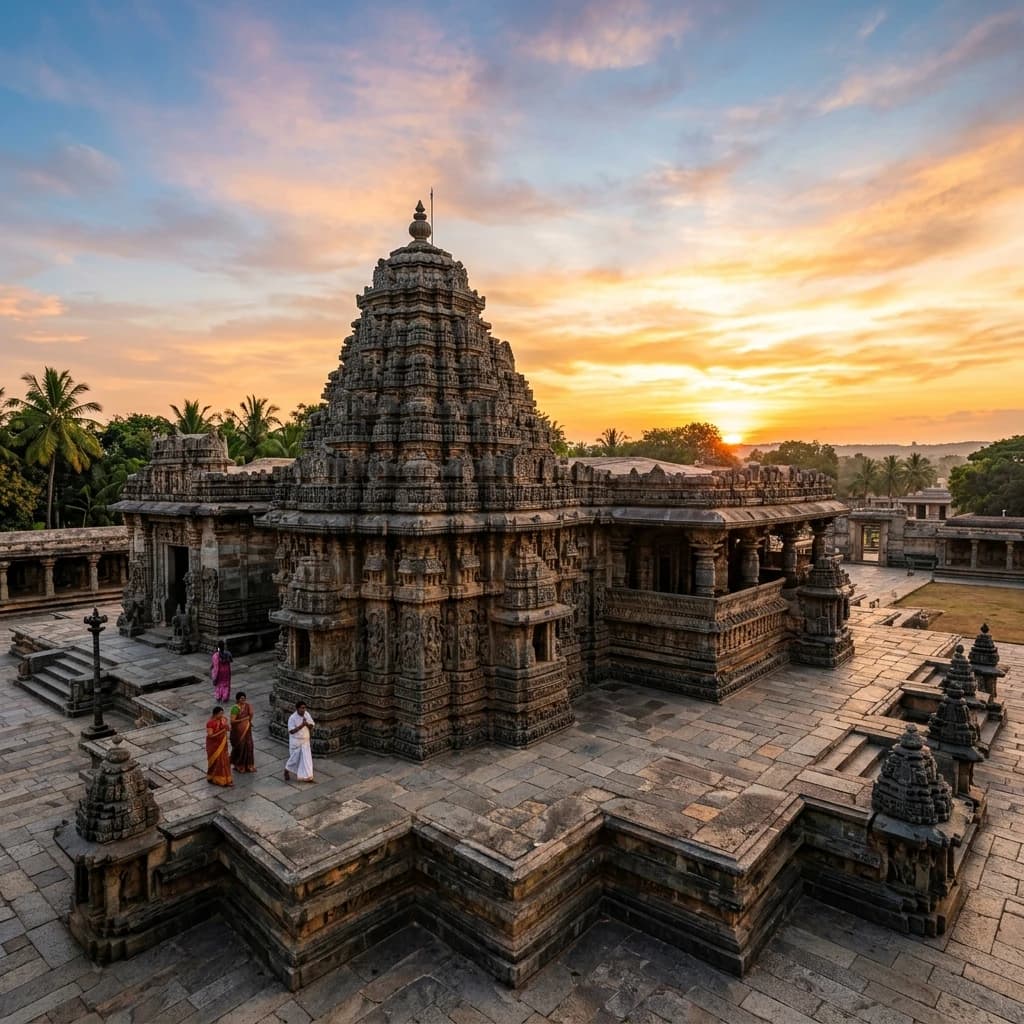
The Chennakeshava Temple, located in Belur, Karnataka, represents the artistic and structural zenith of the Hoysala Empire. Commissioned by the Hoysala King Vishnuvardhana in 1117 CE, the temple was built to commemorate the dynasty's rising political independence and his historic military victory over the Cholas in the Battle of Talakad. Originally named Vijaya Narayana, this temple was established in the Hoysala capital of Velapuri (modern-day Belur) on the banks of the Yagachi River. It stands today as a living monument and a supreme testament to the sophisticated three-dimensional spatial planning of medieval southern Indian architects.
Geologically, the Hoysalas made a revolutionary material choice by using chloritic schist, commonly known as soapstone, as their primary building material. Soapstone is relatively soft when freshly quarried, allowing craftsmen to execute carving with the precision of ivory carvers or goldsmiths. Over centuries of exposure to the atmosphere, the stone undergoes a chemical hardening process, locking the intricate details in place. The architectural design utilizes a stellar (star-shaped) plan for the sanctum (garbhagriha) and the surrounding raised stone platform (jagati). This design creates an outer wall of multiple zigzag projections and recesses, meaning that as the sun moves across the sky, the angles of light and shadow change continuously, making the stone walls appear dynamically alive.
The temple is globally renowned for its bracket figures, known as Madanikas or Shilabalikas (celestial dancers and musicians). Sculpted under the direction of master craftsmen like Dasoja and his son Chavana, these 42 exquisite figures display incredible plastic fluidity, anatomical detail, and emotional expression. Inside the main pillared hall (Navaranga), the interior columns are turned on stone lathes, displaying mirror-like polishes and deep undercuts. One of the central pillars, the Narasimha Pillar, was originally designed with miniature carvings of deities and was historically capable of rotating on its stone bearings, showcasing the mechanical precision of Hoysala engineers.
🗿 The Sandstone Pioneer of the South: Kailasanathar Temple of Kanchipuram
Standing as the oldest surviving structural temple in Kanchipuram, Tamil Nadu, the Kailasanathar Temple is a seminal masterpiece of early Dravidian temple architecture. Built between 685 and 705 CE during the golden age of the Pallava Dynasty under King Narasimhavarman II (popularly known as Rajasimha), the temple was originally named Rajasimha Pallaveshvara in honor of its patron. Unlike the rock-cut cave temples and monolithic rathas that preceded it, Kailasanathar was designed from the ground up as a structural complex, establishing the architectural rules and layouts that would define southern Indian temples for the next millennium.
Architecturally, the Pallavas combined two distinct stones to build this monument. The foundation is constructed of high-density granite to support the massive load, while the superstructure is built of soft, fine-grained sandstone, which provided the sculptors with a highly carvable medium. The temple layout features a square sanctum topped by a soaring four-storeyed pyramidal tower (vimana), which was said to touch the cosmic realm of Shiva, giving the temple its name. A defining feature of this Pallava style is the prominent use of pillars and pilasters featuring rampant mythical lions (vyalas or simhas) at their bases, serving as symbolic protectors of the sacred space.
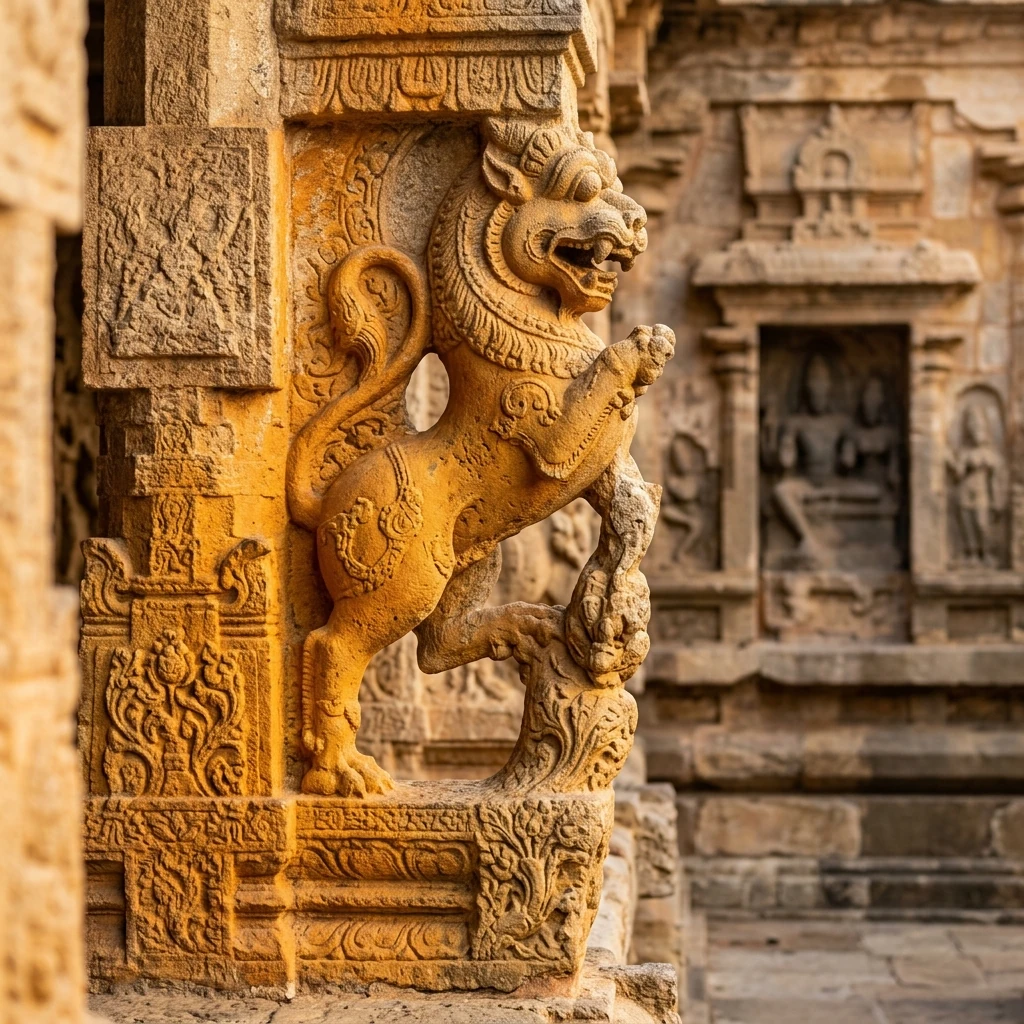
Figure 1: Intricate stone craftsmanship and architectural elements at Kanchipuram Kailasanathar Temple.
The perimeter wall (prakara) of the temple is lined with 58 small sub-shrines (devakulikas), each containing relief carvings depicting various forms of Shiva, such as Somaskanda, Nataraja, and Dakshinamurthy. This arrangement creates a continuous gallery of early medieval iconographic styles. The inner sanctum features a narrow, dark circumambulatory passage where devotees must crawl to pass, symbolically representing the journey of the soul through death and rebirth. Furthermore, the inner walls of these alcoves preserve precious fragments of ancient fresco-style paintings, showcasing the vibrant pigments and classical drawing techniques of the Pallava court.
🔱 The Imperial Confluence of Styles: Virupaksha Temple of Pattadakal
The Virupaksha Temple, situated in Pattadakal on the banks of the Malaprabha River in Karnataka, is the crowning achievement of the Early Chalukya Dynasty. Commissioned around 740 CE by Queen Lokamahadevi to celebrate the victory of her husband, King Vikramaditya II, over the Pallavas of Kanchipuram, the temple was originally named Lokeshwara. Today, it forms the center of the UNESCO World Heritage site of Pattadakal. The temple is historically significant not just for its monumental scale, but because it represents a deliberate synthesis of northern (Nagara) and southern (Dravida) architectural styles, a hallmark of the Vesara style developed by the Chalukyas.
The temple complex is laid out in a unified axial plan within a large walled enclosure (prakara), featuring a massive entrance gateway (gopura) and a separate Nandi pavilion facing the east porch of the main assembly hall (mandapa). The temple's towering Dravidian vimana is crowned with a sukanasa—a nose-like arched projection on the front of the tower—which was a characteristic northern architectural feature, demonstrating the experimental and syncretic nature of Chalukyan architects. The walls are constructed of massive sandstone blocks fitted together with precision, relying on gravity and interlocking joints rather than mortar.
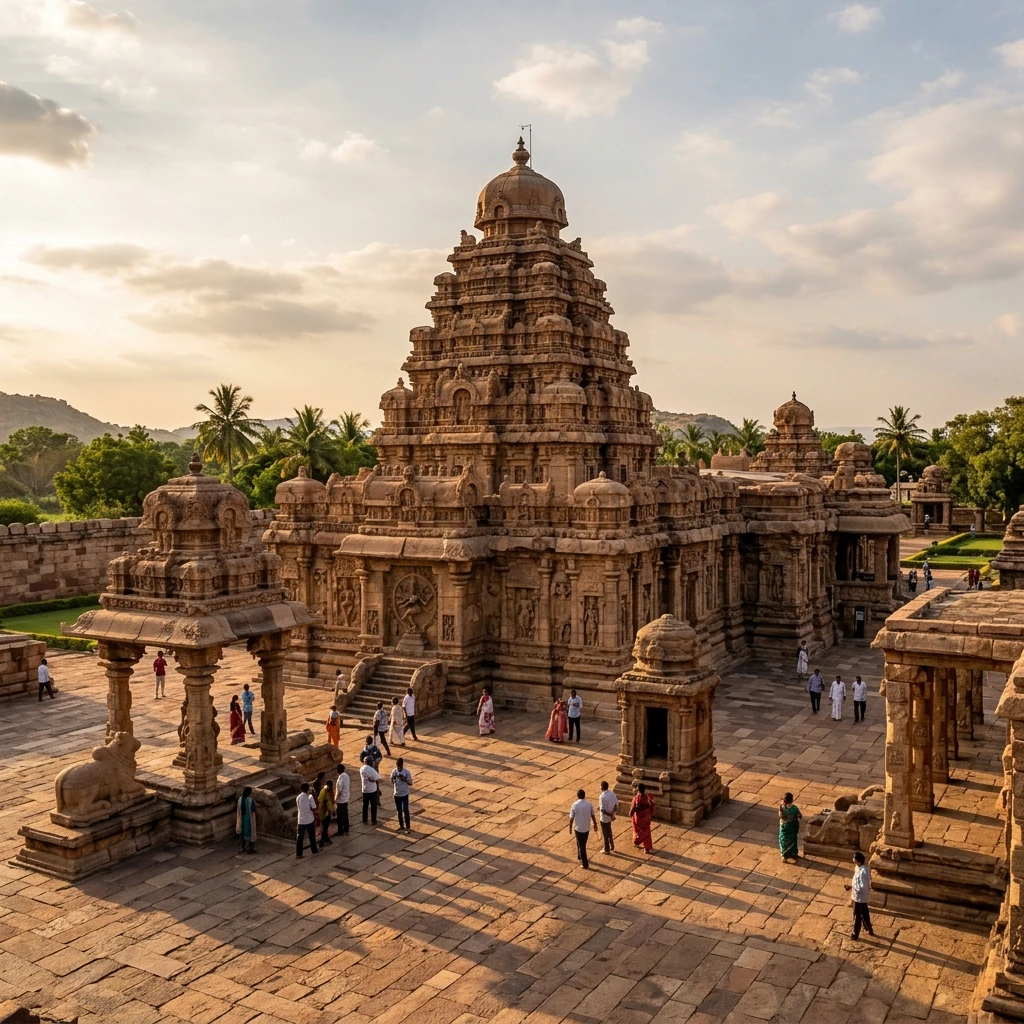
Figure 2: Architectural design and monumental structures at Pattadakal Virupaksha Temple.
Inside the mandapa, the 16 massive square columns are decorated with relief carvings depicting detailed episodes from the Hindu epics Ramayana, Mahabharata, and Bhagavata Purana. These carvings provide a vivid window into the socio-cultural life, costumes, and military tactics of the 8th century. The outer walls feature majestic sculptures of deities, including Nataraja in various dance poses, Lingodbhava, and Ravananugraha (Ravana shaking Mount Kailasa). Most notably, the temple walls contain inscriptions celebrating the names of the master architects and sculptors, such as Gunda (also known as Anivaritachari), showing the high social status and imperial recognition granted to artists in the Chalukyan kingdom.
📌 The Bottom Line
- belur-chennakeshava: The Chennakeshava Temple highlights the pinnacle of Hoysala soapstone carving, using a star-shaped plan to create a dynamic interplay of light and shadow on its detailed walls.
- kanchipuram-kailasanathar: The Kailasanathar Temple represents the earliest structural Dravidian design, introducing sandstone vimana construction and iconic rampant lion pillars to South India.
- pattadakal-virupaksha: The Virupaksha Temple stands as a monument of Chalukyan victory and synthesis, masterfully blending northern and southern architectural elements into a unified complex.
Enjoyed this post?
Get our weekly digest delivered free.
Share this post:
Knowelth is reader-supported. We may earn a commission from links in this article at no extra cost to you. Read our disclosure.
Related Posts
Stone Chronicles of Sovereignty and Democracy: The Epigraphic Legacy of Aihole's Meguti Temple, Uttiramerur's Assembly Inscriptions, and the Royal Reliefs of Hampi's Hazara Rama
Stone Chronicles of Sovereignty and Democracy: The Epigraphic Legacy of Aihole's Meguti Temple, Uttiramerur's Assembly Inscriptions, and the Royal Reliefs of Hampi's Hazara Rama Across the diverse lan…
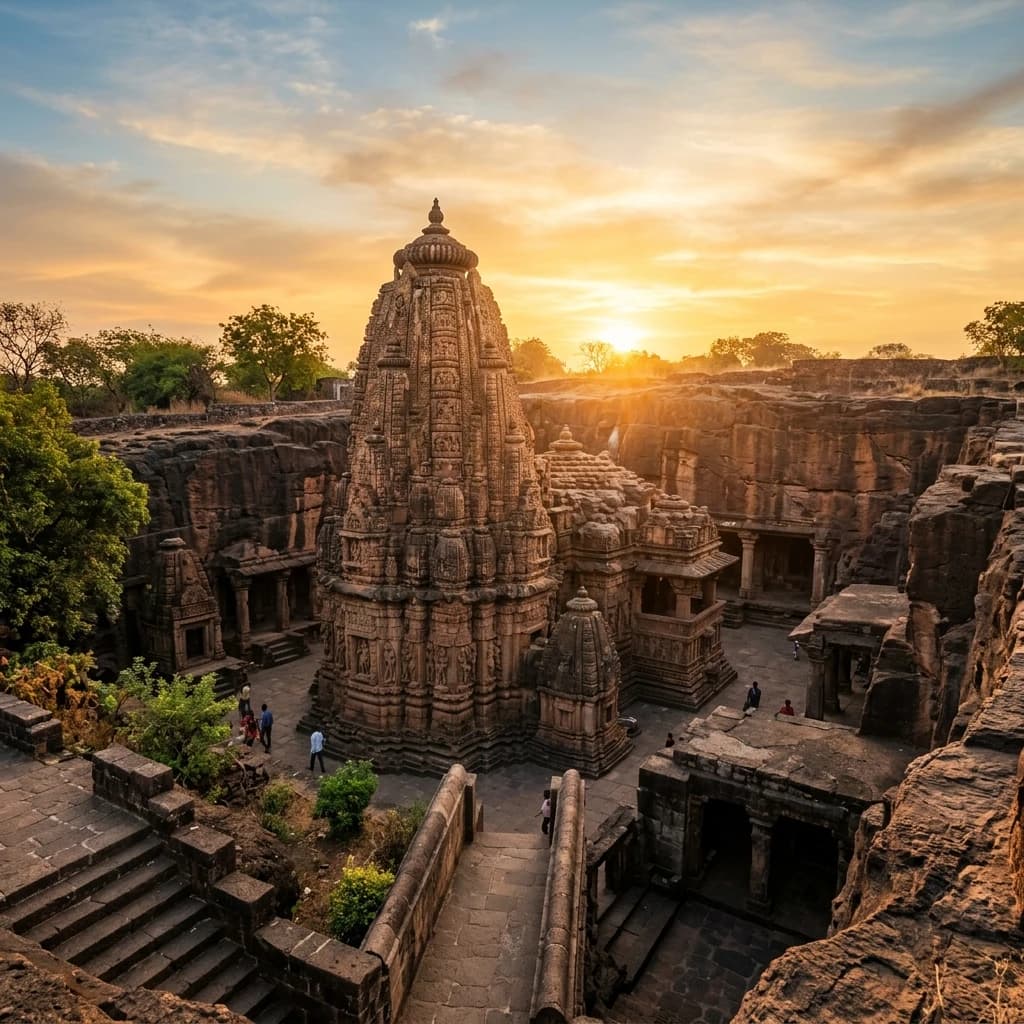
Monolithic Cliffs, Alpine Spires, and Chariots of Stone: The Architectural Feats of Dhamnar, Baijnath, and Melkadambur
Monolithic Cliffs, Alpine Spires, and Chariots of Stone: The Architectural Feats of Dhamnar, Baijnath, and Melkadambur Across the vast geographical expanse of the Indian subcontinent, ancient and medi…
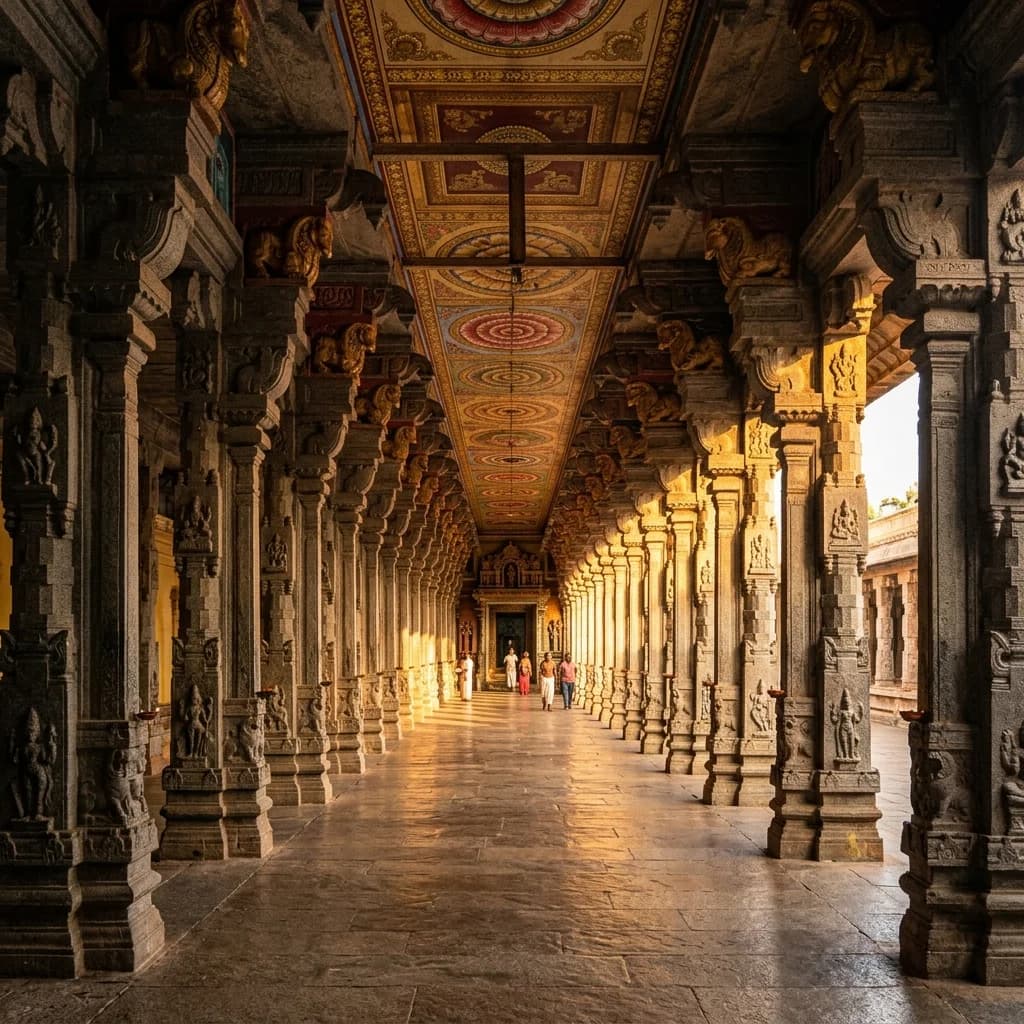
Sacred Corridors, Interlocking Stone Chains, and Thousand-Pillar Sanctuaries: The Architectural Marvels of Rameswaram, Kanchipuram, and Moodabidri
Sacred Corridors, Interlocking Stone Chains, and Thousand-Pillar Sanctuaries: The Architectural Marvels of Rameswaram, Kanchipuram, and Moodabidri Across the Indian subcontinent, sacred architecture r…